Tarot VR
Tarot VR is an immersive Tarot experience that allows users to take an interactive look into their fortune using the Occulus Quest 2.
Project Info:
- Role: Game Programmer, Designer, Level Designer, Project Lead
- Timeline: 6 Weeks, March 2025
- Team Size: 5
Tools/Skills: Unity, C#, Blender, Occulus Quest 2, VR Development, Teamwork, Communication, Leadership, Level Design
Problem: The assignment was to create a playable Virtual Reality (VR) experience by the end of the semester.
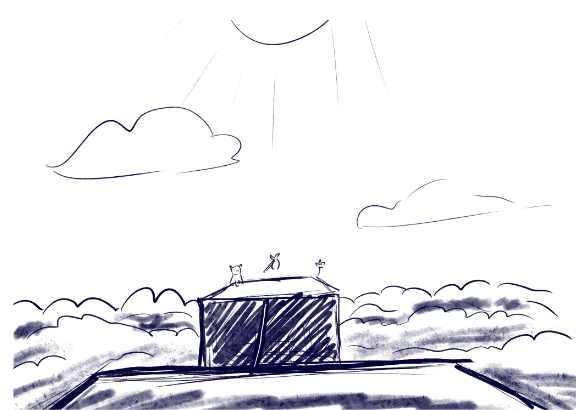
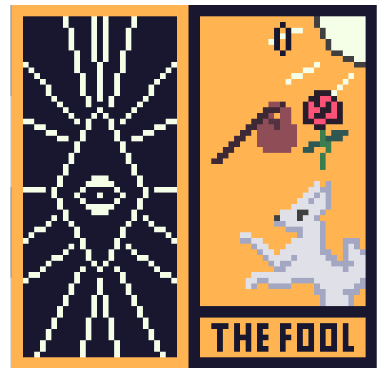
Process: We decided to develop for the Quest 2 because one of our members owned one which made it more convenient for us to have access to testing equipment. The approach for this project was to place the user in a zen environment, shuffle cards in front of them, let them choose a card, and then present them with a portal to a unique room linked to the specific card. I had the idea to create an interactive puzzle or challenge in each room to make the experience more engaging. For example, in the Fool’s room, the player needs to walk across a thin tightrope to cross a gap between two structures. Upon reaching the other side they can read more about the symbology present within the card’s design. Our original plan was to create eleven rooms for each of the major arcana (cards) present within tarot readings. Unfortunately, we had spent more time than anticipated working on understanding VR, and implementing the teleportation and cards. Our final prototype only included 3 cards with accompanying rooms.
Learnings: My responsibilities for this project were to implement the portal functionality, design each 3D room using assets created by our artists, allow cards to shuffle and be held by the player, and allow users to interact with certain objects to read about their symbolic meaning. My main takeaway from this assignment was learning how to dissect an unfamiliar medium and understand how to work with it to create something new. I had never worked with VR before this project so I spent a large portion of time working my way through the sample projects provided by Unity. I also had to adapt to a unique workflow in order to be able to test the project during development. Since VR requires a headset, I needed to find a computer that was powerful enough to run the project and a headset to test anything. This resulted in many times where I would work on the project at home and have to wait to get into the lab the following day to test the changes. This project gave me an opportunity to work further on my leadership and communication skills. Due to the rest of my group being unfamiliar with game engines, they trusted me to delegate what work needed to be completed and help them troubleshoot their issues. Throughout this project, I got a chance to become more familiar with Unity. I had not used it previously, and I learned a lot about it here. The component workflow and multitude of tutorials made working with the engine a smooth experience for me.