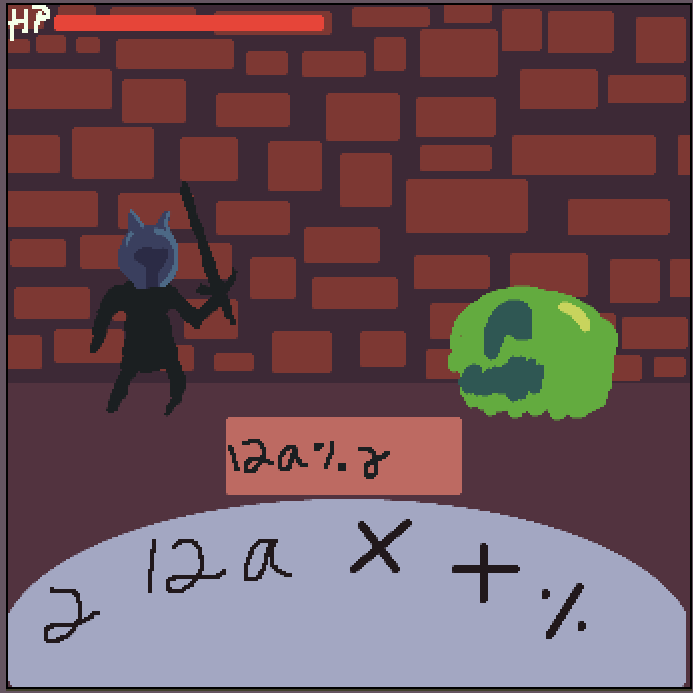
Process: To ensure that the game would be engaging to children, the setting of this game is fantasy with vibrant pixel art. The gameplay has the player fighting various monsters in a series of dungeon rooms using a deck of cards to attack and defend with by building various equations. We opted to make the game a deck-building rogue-like. Each time you start the game you progress through the levels until you reach a boss. If you fail or win, you start over and do it all again. After every level the player is rewarded with a new random card to add to their deck which they may use during the following levels. This allows the experience to differ each session and the player consistently feels like they are growing. To teach simple equations and arithmetic, we made each card in the players deck an integer or a mathematical operator. The player strings together a series of cards to create an equation that evaluates to a value. Which they could then use to attack the enemy or defend from incoming attacks. Our group used the Scrum framework to ensure we were meeting multiple times per week both in and outside of class. We also decided to use Godot as I was the only person in the group who had experience with using a game engine and was comfortable with it.
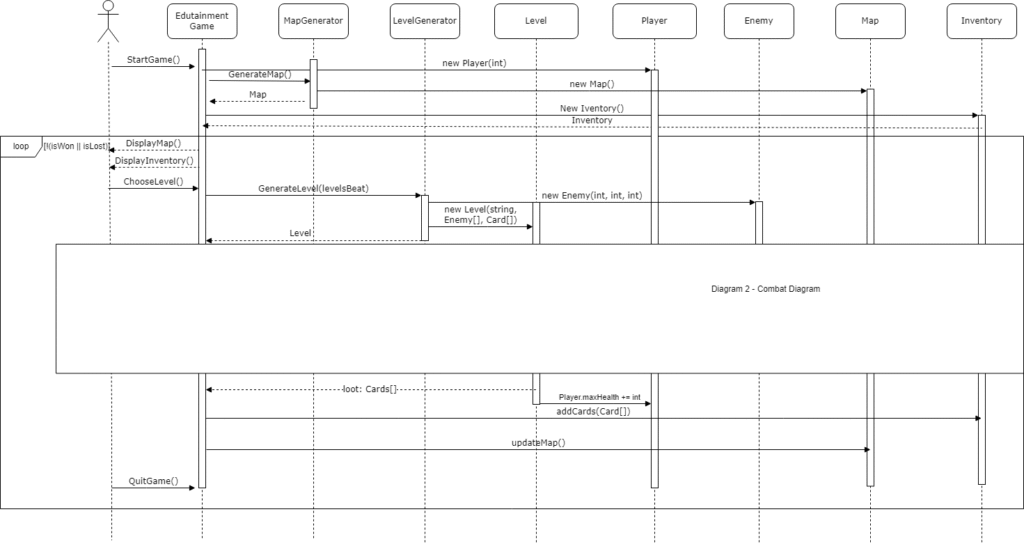
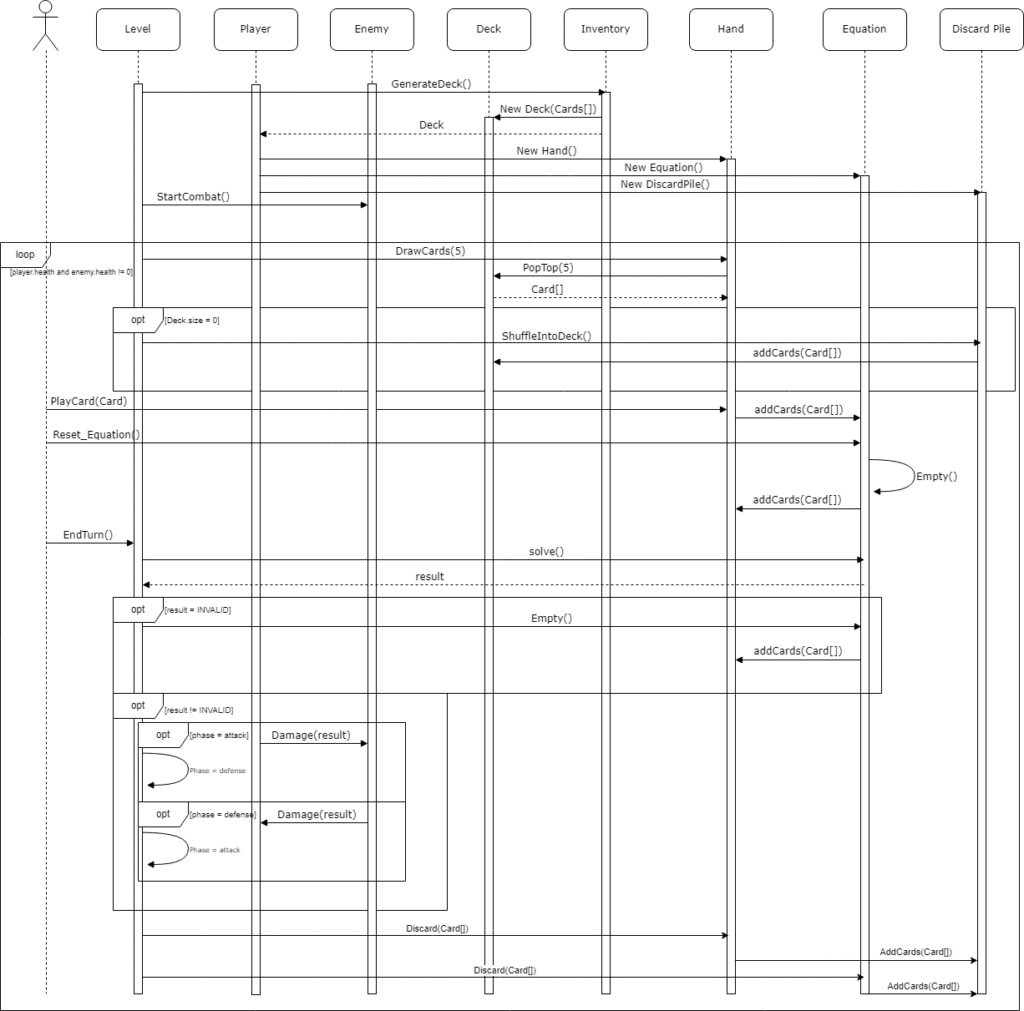
Learnings: This project helped me grow as a developer in several ways as it was the first time I had worked in a team environment to create a game. In addition to working on the design and development, I was designated as the artist and responsible for every visual element within the game. Thanks to this, I gained experience building my skills with 2D pixel art and User Interface (UI) development. I was responsible for creating and connecting the main menu, win, loss, and reward screens. I also implemented card drag and drop, as well as the card manager that stored and moved the cards in the players inventory, hand, and discard piles. The card manager was also responsible for actions such as shuffling and creating new cards. Through this, I learned a lot more about using Git in a team setting. Writing the SRS was an incredibly helpful part of the project. Even though it was not a Game Design Document (GDD), it was an opportunity to practice pitching, outlining, and designing a software project at a high level. The document spanned 40 pages and covered everything from purpose, scope, and constraints to low-level prototype-specific use case scenarios and diagrams.